What is OCD?
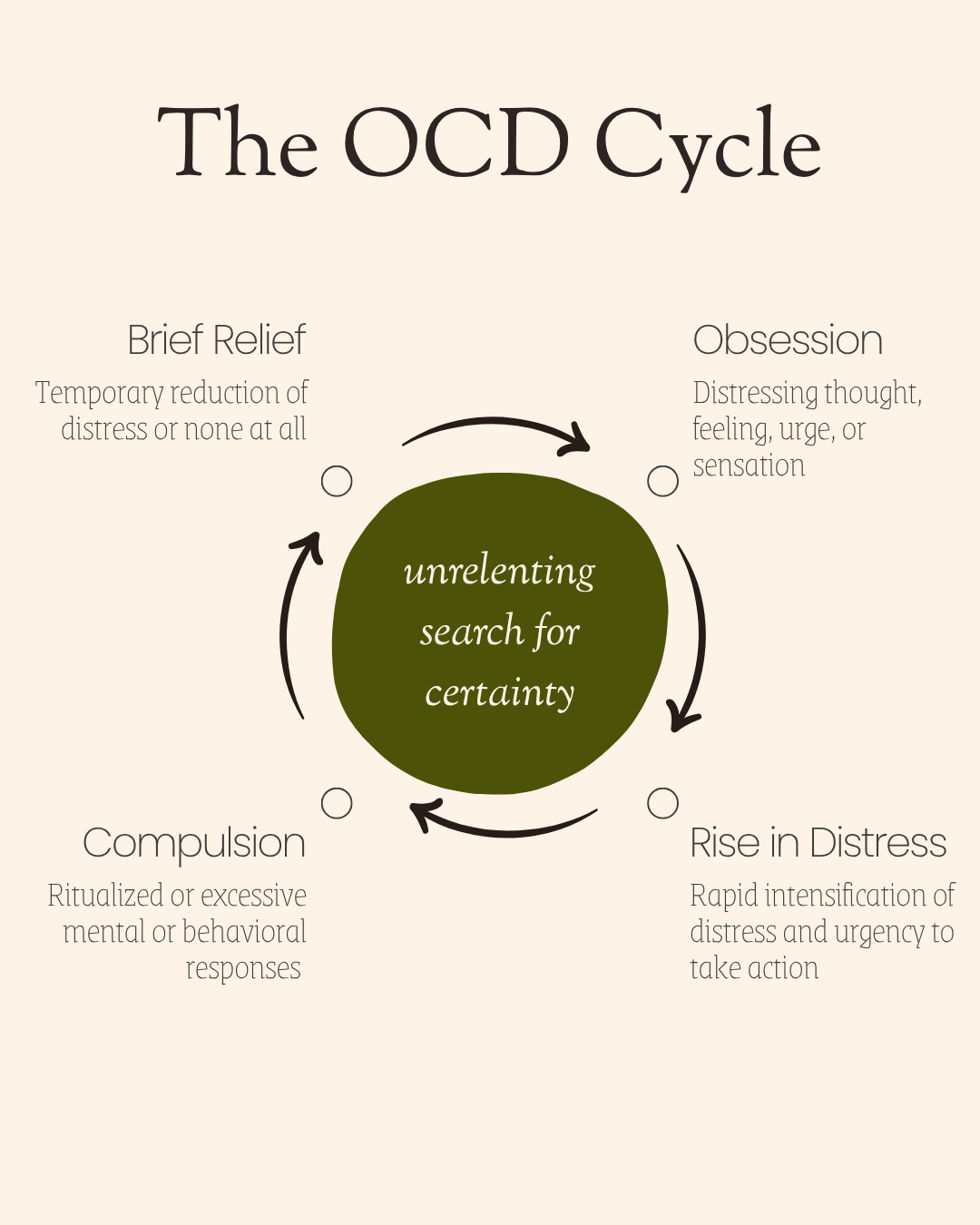
Obsessive-Compulsive Disorder (OCD) is a cognitive-behavioral disorder characterized by either obsessions, compulsions, or both. Obsessions are any distressing, intrusive thoughts, feelings, images, sensations, or urges. Compulsions are any ritualized or excessive mental or behavioral attempts to reduce, eliminate, or avoid the distress caused by obsessions. While many of us experience some sort of intrusive thoughts and respond in ways to bring down distress, obsessions and compulsions in OCD cause significant levels of distress, and interfere with a person’s daily functioning and quality of life.
Within the OCD cycle (shown below), the associated fears & risks are experienced as very real and extremely high stakes, no matter the probability of the feared outcomes occurring. Because of this, it only makes sense that someone would do anything possible to bring down that fear or avoid any possibility of that happening, again, no matter the “logic” behind the actions. There are many common themes within OCD, including contamination, perfectionism, scrupulosity (ie, faith/morality), and relationship; as well as some “taboo” themes, including harm, sexual, and sexual orientation. The themes of OCD often arise due to the typical nature of OCD attacking the aspects of our life that we care about the most.
OCD is very misunderstood and stigmatized, leading to vast misrepresentation of the reality of OCD and poor treatment from untrained providers. The themes and distress of OCD are often wrapped up in shame, leading people feeling isolated and unable to talk about them. If any of this is something that you’ve been experiencing and don’t know what to do, you’re not alone. I’d love to talk with you about what you’re going through and help you reclaim your freedom from OCD.